
Whoa! This is one of those topics that feels simple at first, then gets messy. My instinct said: keep it practical. Initially I thought OKX was just another exchange, but then I dug into their futures liquidity and web3-tooling and, honestly, there are surprises you don’t get from the surface-level charts. I’m biased — I’ve been poking around order books and APIs for years — and some parts still bug me.
Seriously? Yes. The first thing to understand is product depth. OKX offers deep futures markets with cross-margin and isolated positions that suit both scalpers and long-term hedgers. The UI hides a lot of power under relatively clean tabs, though you’ll need to flip a few switches to get full access. If your goal is execution quality, check spreads during peak hours — that’s when depth matters most and slippage shrinks. On the other hand, if you’re exploring web3 integrations, their wallet and dApp links can be handy when you’re building or testing strategies that touch both CEX and on-chain liquidity pools.
Hmm… here’s the thing. Security feels solid most of the time. Two-factor, device whitelisting, and API key scopes exist for a reason — use them. I once left an API key too permissive (rookie move), and that taught me faster than any guide ever could. Actually, wait—let me rephrase that: you don’t have to be paranoid, but treat permissions like currency. Tight scopes, read-only where possible, withdraw restrictions when you can. Yes, it’s extra setup, but it’s worth it when you’re juggling margin and futures.
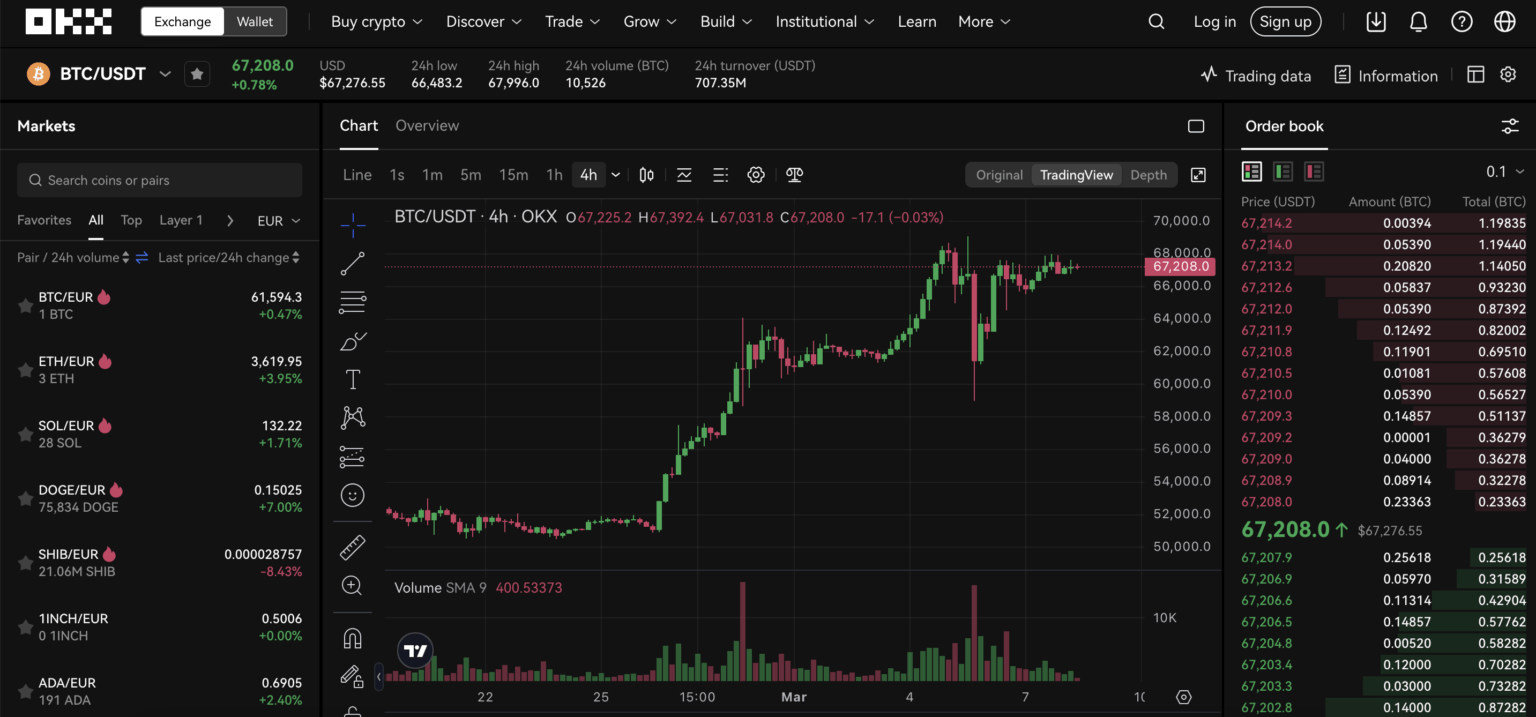
Practical tips for logging in and staying nimble
Here’s a quick tip that saves time: bookmark the login flow you actually use. For some traders that means the standard web sign-in. For others it’s SSO or a hardware-authenticating approach. If you want the direct page I use as my starting point, check this okx login — it’s what I click when I’m on desktop and need to get to the dashboard fast. Keep in mind that odd behaviors can show up when you bounce between devices. I’ve seen balances appear differently on mobile vs desktop until the session syncs; weird but true.
On trading workflow: set up templates. Seriously — order templates for common trade sizes, stop-loss percent, and take-profit levels. That reduces the cognitive load when markets spike and your hands get twitchy. Also, practice the “two-click” sanity check: place a limit, verify its size and price, then confirm. The extra second saves a lot of regret. On the backend, watch your fee tiers and maker/taker status — they change with volume and promotions, and they matter for strategy PnL.
Something felt off about relying solely on the GUI, though. So I started using the API for backtesting and small live experiments. On one hand the API is robust with decent rate limits; on the other hand you have to read the docs closely because some endpoints return nested objects that are easy to mis-parse. Initially I misread position sizes (user error), and that cost me a lesson in parsing — again, painful but educational. On a technical level, always account for timezone stamps and server-side rounding.
Okay, so check this out — funding rates are a stealth tax or income, depending on which side you’re on. If you hold perpetuals, funding can eat into returns over long windows. Hedge smart. If you go delta-neutral across spots and futures, funding becomes a line item you can optimize. I won’t claim there’s a perfect hedge; market structure shifts fast, and what worked last month may not next month.
Trading on OKX’s web3 side is different energy. There’s less friction if you understand wallets and signatures, but gas and smart-contract risk enter the picture. I’m not 100% sure every trader needs web3 interactions, but if you build strategies that arbitrage on-chain AMMs and centralized futures, you can find edges. (Oh, and by the way… always simulate before you bridge assets live.)
One annoying but real point: customer support response times vary. During big moves, wait times stretch. If you rely on instant support for operational issues, craft fallback plans. Keep withdrawal whitelists updated and document recovery steps. Also, export your trade history routinely — tax season comes quicker than you’d like, and clean CSVs are a lifesaver.
Longer-term, watch how OKX positions itself in the web3 ecosystem. Their tooling is not just about trading; it’s about being a bridge for developers who need both centralized primitives and on-chain rails. That hybrid approach can be powerful, though it also means the platform has to maintain two distinct reliability standards simultaneously. On the infrastructure side, uptime and settlement speed will make or break institutional adoption.
Another practical nudge: when testing strategies, create a sandbox or testnet account where possible. If you can’t avoid real funds, use micro-trades first. Markets are noisy, and small experiments reveal unexpected latency and slippage issues without tanking your PnL. Be patient with setup. Rushing leads to mistakes — very very costly ones sometimes.
Frequently Asked Questions
How do I protect my futures positions from unexpected liquidations?
Use proper margin settings: consider isolated margin for risky, concentrated bets, and cross margin for portfolio-level hedging. Use stop orders and monitor maintenance margin thresholds. Also, size positions relative to account equity so one volatility spike doesn’t wipe you out. I’m biased toward conservative sizing — it keeps you in the game.
Is using OKX’s API worth it for active traders?
Absolutely useful, yes. The API enables automation, faster order routing, and programmatic hedges. But there’s a learning curve: rate limits, error handling, and signature management matter. Test extensively on testnet or with tiny allocations first. On the flip side, the API removes the mental lag of clicking during high-volatility events.
Can I connect web3 wallets and trade seamlessly?
Mostly yes, but expect complexity. Wallet integration lets you move assets on-chain, interact with dApps, and tap into DeFi opportunities. However, bridging and contract interactions carry extra risks — approve only trusted contracts, and double-check gas settings. If you plan to combine on-chain and off-chain trades, plan the timing carefully; network congestion can ruin an intended hedge.